Meraki Tech Global · Manufacturer tutorial
Meraki: from grind to cup
Watch burr adjustment, weighed dosing, extraction temperature stability and glossy milk pouring.
Watch on YouTube ↗If the player does not work, open the video on YouTube.
04 / STEP-BY-STEP BREWING
Calculate your exact gram dose, start the live pour-over companion timer beside your kettle, and follow three foolproof signature recipes for filter, French press and espresso.
THE ESPRESSO WORKSHOP · ON VIDEO
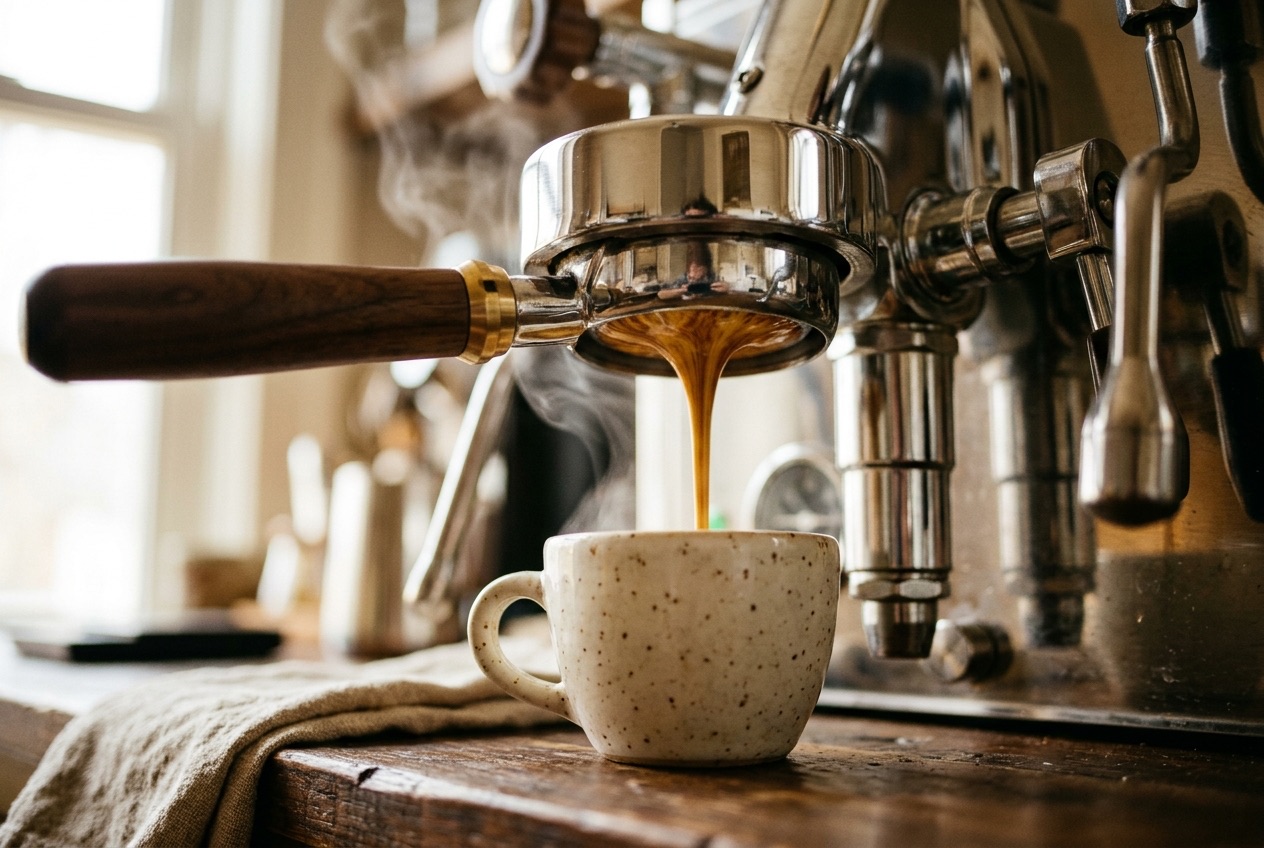
On a semi-automatic portafilter machine like Meraki or Breville, you prepare the coffee bed by hand while a pump delivers steady pressure. Seeing real flow dynamics makes dialling in at home intuitive.
Meraki Tech Global · Manufacturer tutorial
Watch burr adjustment, weighed dosing, extraction temperature stability and glossy milk pouring.
Watch on YouTube ↗If the player does not work, open the video on YouTube.
Breville · Manufacturer tutorial
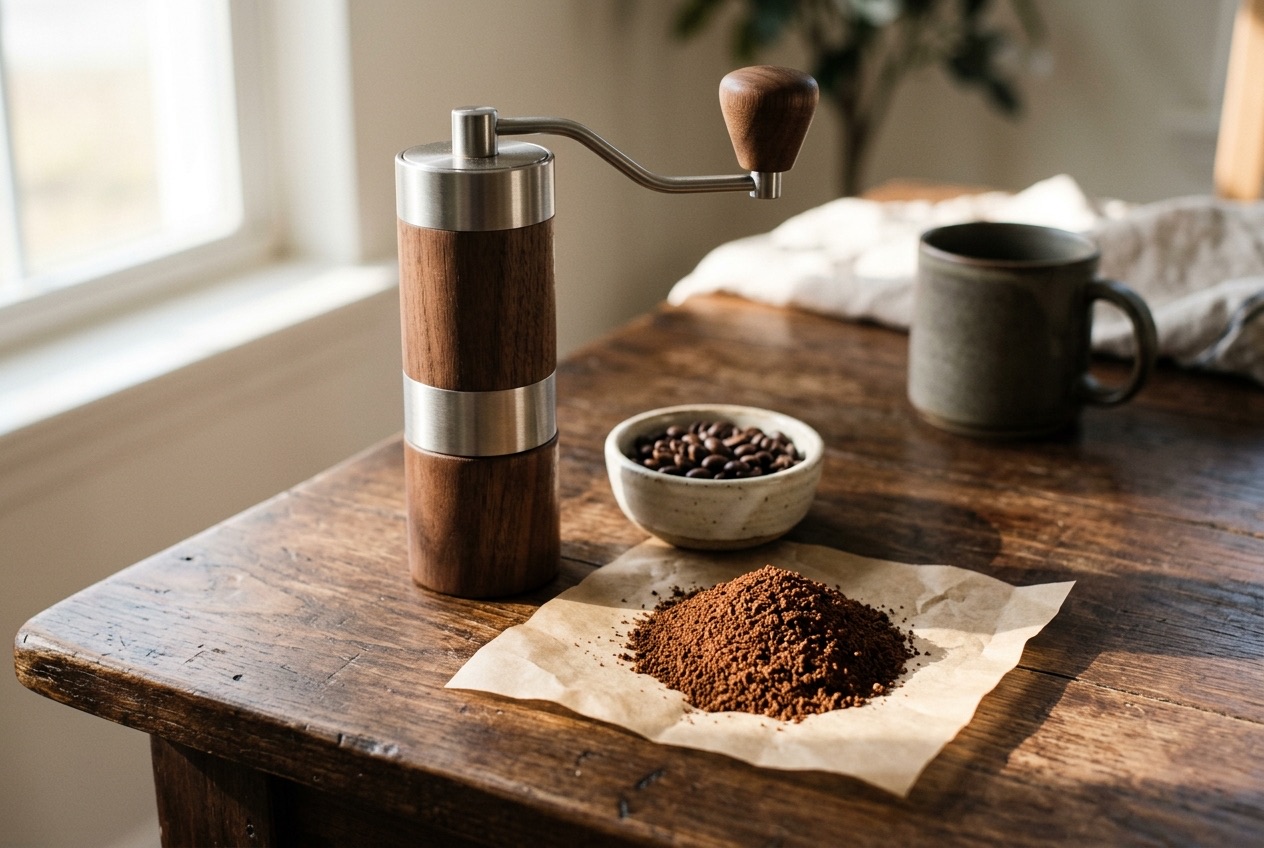
Spot a shot that runs too fast or chokes too slowly and see exactly how to adjust your grinder.
Watch on YouTube ↗If the player does not work, open the video on YouTube.
YouTube players load only after you click. YouTube then receives connection data and applies its own privacy policies. Videos are in English; captions depend on YouTube.
Weighing to 0.1 g, breaking up clumps evenly and tamping dead-level prevent high-pressure water from carving weak channels.
After 6 to 8 seconds of pre-infusion, dark drops should merge into a supple, honey-like hazelnut stream — neither pale gushing nor stalled dripping.
Keep your recipe steady (e.g. 18 g in → 36 g out), stir the crema with a spoon before sipping, then adjust only one variable at a time.
RATIO CALCULATOR
Pick your brewer or tap a cup size preset. Water refers to poured brew water (grounds retain roughly twice their dry weight in liquid).
Designed for pour-over, electric drip and French press. For espresso (1:2 liquid yield), open the espresso recipe tab below.
GUIDED RECIPES & LIVE TIMER
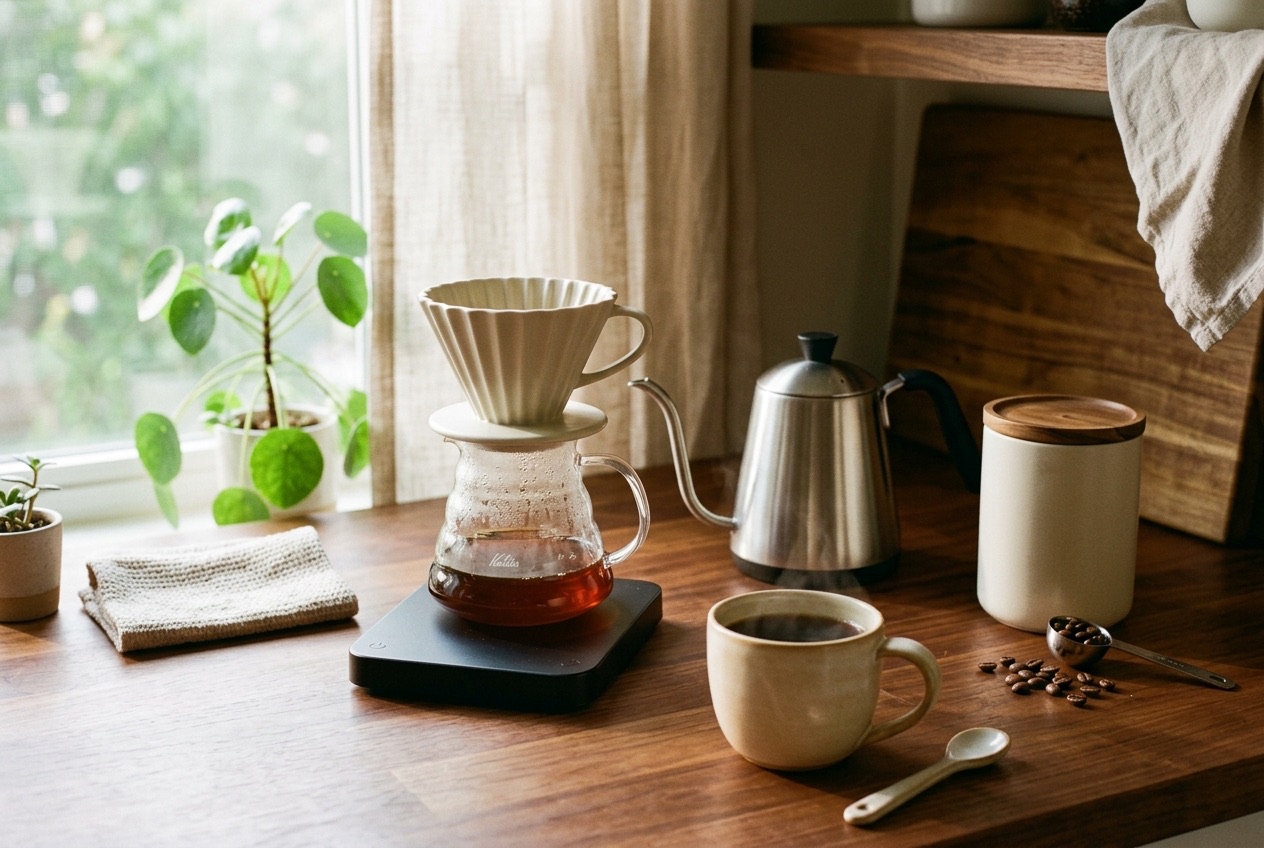
Pick your method below — for manual pour-over, run our live step-by-step timer right next to your scale.
RECIPE 01 · CLARITY & SWEETNESS
Adapted from Hario’s educational V60 guide for a clean, sweet, fragrant single cup.
If the spent coffee bed looks like a flat sandy beach rather than a steep crater clinging to the walls, your extraction was wonderfully even.
Follow target scale weights in real time as you pour.
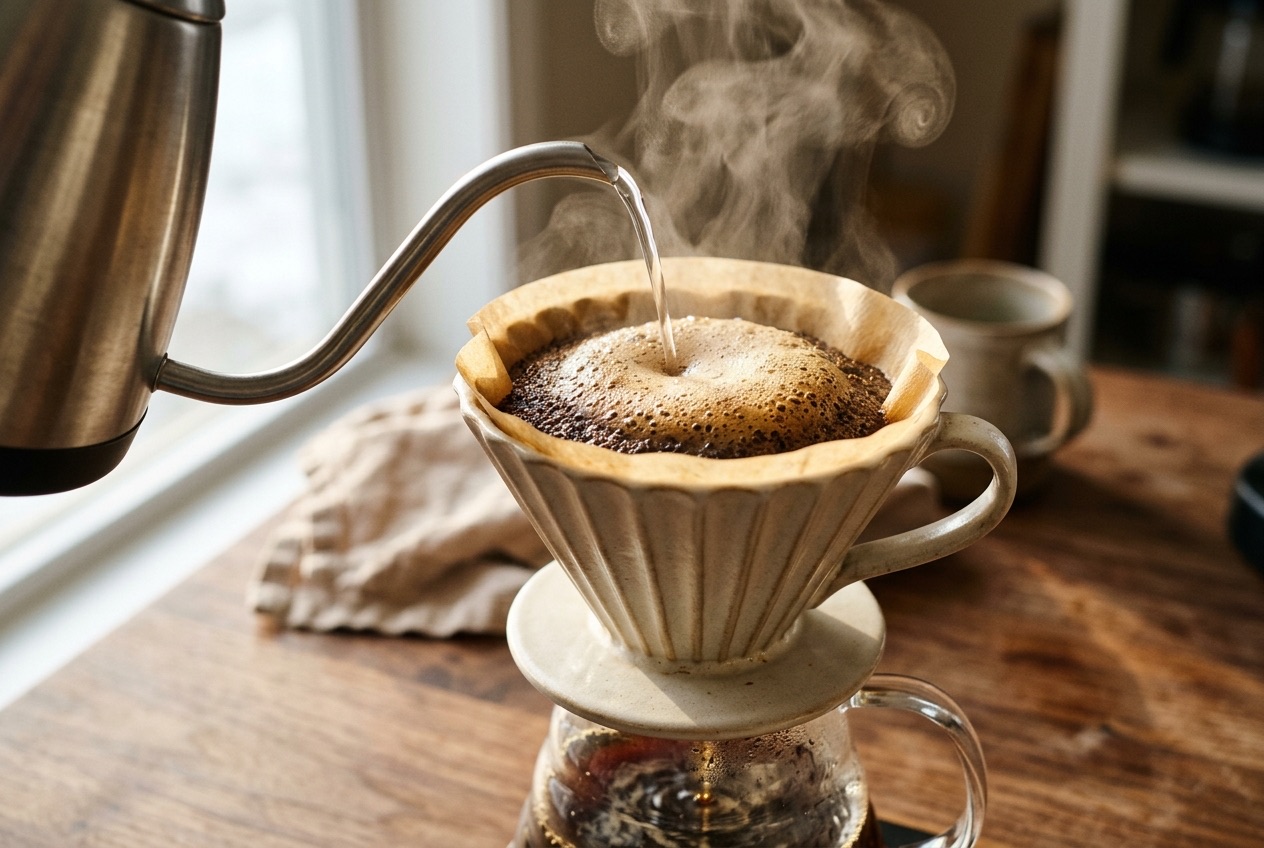
Pour 45 g of hot water in spirals to wet every ground. Give a gentle swirl and let golden bubbles release gas.
Pour a steady stream from centre outward without hitting the paper walls until your scale reads 150 g.
Gently top up to 250 g total to keep thermal energy steady and submerge floating grounds.
Give one gentle circular swirl so grounds settle flat. Once drained, remove the dripper, swirl and sip!
Fold the paper filter seam, set it in the dripper and rinse thoroughly with hot water to banish paper taste and warm the carafe. Discard the rinse water!
Grind 15 g medium-fine (soft sand), add to the centre, tap gently to level the bed and tare your scale to zero.
Start your timer and pour 45 g of hot water across all grounds. Let the golden dome degas peacefully for 45 seconds.
Pour steadily in slow spirals up to 150 g (by ~1:15), then up to 250 g before 2:00. Let drain until ~2:45, swirl the carafe to aerate and serve!
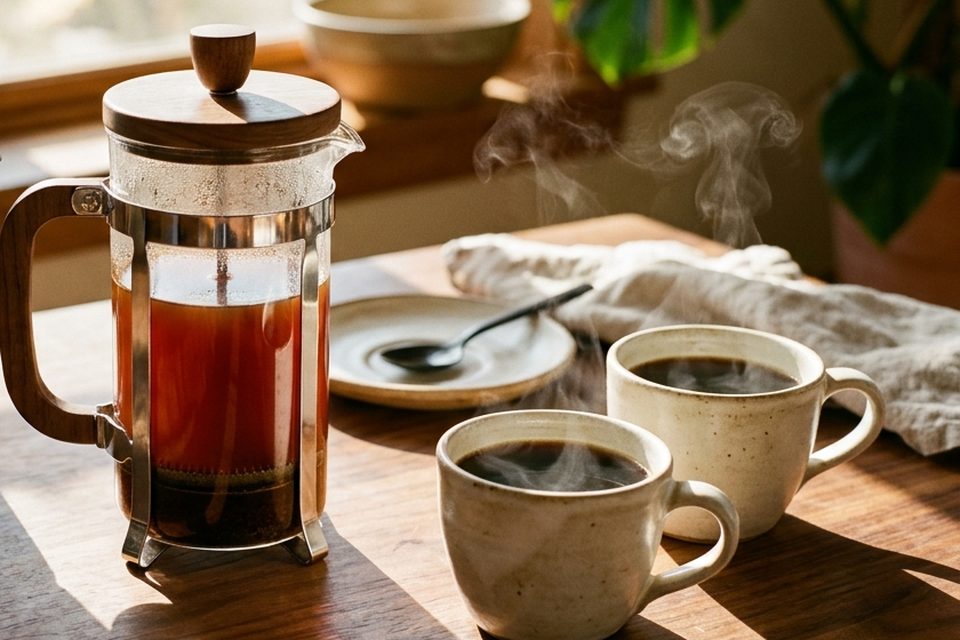
RECIPE 02 · PLUSH BODY, ZERO GRIT
One simple spoon trick removes harshness and muddy sediment while keeping velvety immersion body.
Stopping the plunger at the surface keeps settled micro-fines undisturbed at the bottom, giving you a remarkably clean, silky cup.
Add 30 g of coarse coffee (flaky sea salt) into a pre-warmed press and pour all 500 g of hot water in vigorously so every particle saturates.
Leave the plunger off! Let a fragrant crust form peacefully on top for a full 4 minutes.
Gently stir the top crust three times so grounds sink, then use two tablespoons to skim off the pale floating foam where bitter dust gathers.
Wait 2 to 3 quiet minutes for fine silt to settle, press the screen only down to the liquid surface (never crushing the bottom bed!), and pour smoothly.
RECIPE 03 · PRESSURE & MICROFOAM
Weigh dry coffee going in and liquid espresso coming out — goodbye guesswork.
If 36 g gushes out in 15 seconds (pale and sour), grind finer. If it chokes past 42 seconds (bitter and dry), nudge the grinder slightly coarser.
Keep your portafilter locked in while heating, wipe the basket bone-dry and weigh the exact dose suited to your basket (commonly 18 g for a double).
Fluff away any clumps, settle the bed flat and tamp firmly and level: tamping crooked causes channelling far more than pressure differences ever do!
Place a small scale under your warm cup: rich dark drops should appear around 6–8 s and coalesce into a honeyed “mouse tail” reaching 36 g in 25 to 30 s.
Swirl the espresso once to blend crema layers (where aroma concentrates) before sipping or pouring 62 °C microfoam milk right into the centre.
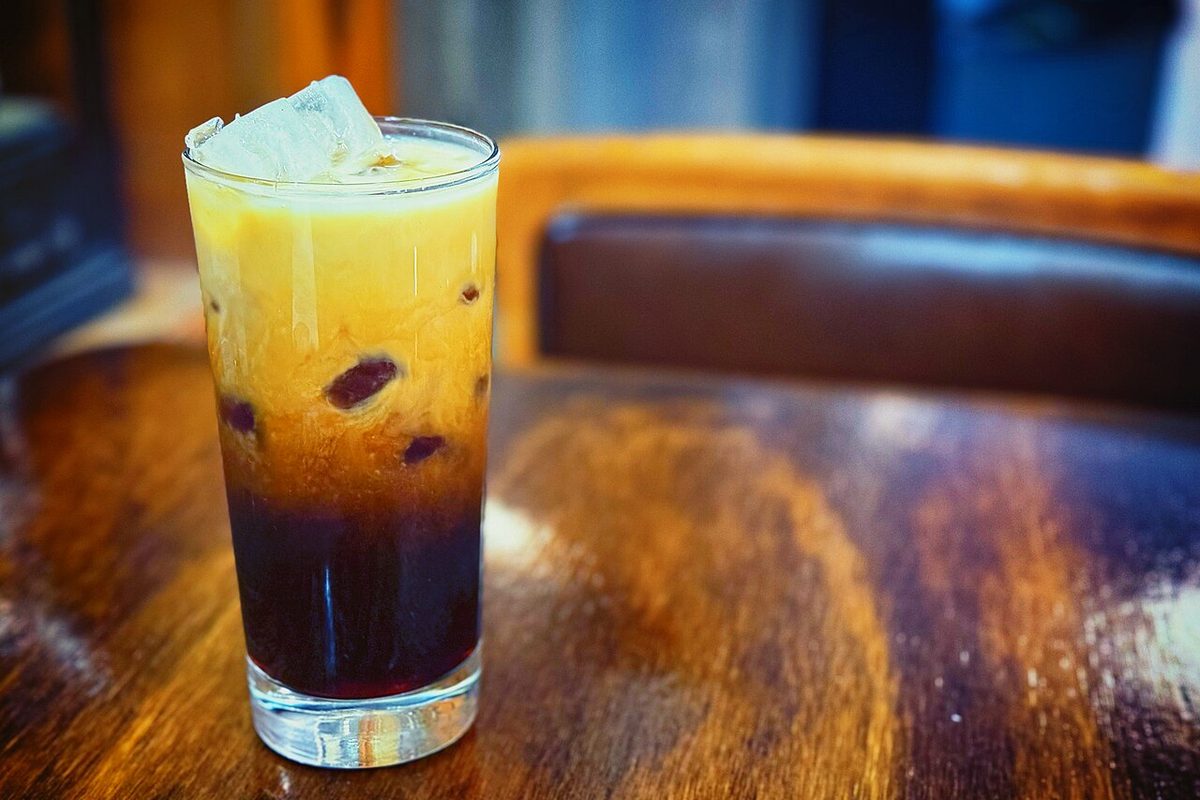
RECIPE 04 · FLASH-CHILLED CLARITY
Extracted hot to capture sparkling florals and sweetness, chilled instantly onto ice so it never tastes flat or watery.
Try this method with a washed Ethiopian or Kenyan arabica — peach, blackcurrant and citrus notes pop like an artisanal iced tea.
Rinse your paper filter separately with hot water first, then place 100 g of large ice cubes straight into the empty carafe.
Because only 150 g of hot water passes through the bed instead of 250 g, grind your 16 g dose one click finer than usual to unlock full sweetness.
Pour 40 g of 94 °C water for a 35-second bloom, then pour gently in two slow stages until your scale reads 150 g of poured water.
Swirl the carafe until the last dilution cubes melt completely, then pour over fresh ice in a tall glass for vibrant summer refreshment!
Benchmarks adapted from Hario educational guides and the National Coffee Association. Always tune to your own palate. Hario ↗
Chlorinated tap water masks delicate aromatics; distilled water extracts flatly; chalky hard water mutes fruity sparkle and scales boilers. Fresh pitcher-filtered water or balanced spring water unlocks instant clarity.
Using a standard kettle? Bring water to a boil, take it off the heat and open the lid for 30 to 45 seconds — you’ll land right around 93–94 °C! Never pour roaring-boil water straight onto a dark roast.
A cold stoneware mug steals 8 to 10 °C from an espresso or small pour-over on contact. Swirl hot tap or kettle water in your carafe and cup first — then enjoy how flavours blossom even further as the drink cools toward 55–60 °C!
Natural coffee oils oxidise quickly on glass carafes, portafilter spouts and grinder burrs, adding rancid bitterness to fresh beans. Rinse daily with hot water, dry-brush your grinder weekly, and descale water tanks as needed.
CLEAN GEAR, SWEET COFFEE
Even world-class beans taste harsh when brewed through oxidised coffee oils. This effortless rhythm keeps your setup tasting sweet year after year.
Knock out spent pucks or filters right away, flush 2 seconds of hot water through the espresso grouphead, wipe the steam wand with a damp cloth then purge a burst of steam, and rinse carafes warm.
Brush dry grounds out of grinder burrs (never put water on steel burrs!), unscrew and wash your French press mesh screen, and rinse the removable brew group on bean-to-cup machines under lukewarm tap water.
Soak espresso baskets, portafilter spouts and glass servers in hot water with a dedicated coffee detergent (like Cafiza), and run a gentle descaling cycle whenever your water hardness calls for it.
Before replacing your coffee maker: a quality burr grinder (even a hand grinder!) paired with a simple 0.1 g kitchen scale and freshly roasted beans. A humble $10 dripper or French press with freshly milled beans beats a pricey machine fed stale pre-ground coffee every single morning.
Surprisingly, no! Caffeine stays very stable through roasting. However, dark beans puff up and lose moisture weight: if you measure by scoops (volume), you actually scoop fewer beans — and slightly less caffeine — than with dense light-roasted beans!
Yes! Any 100% arabica or blend works across methods once you match grind size and ratio. In practice, light-to-medium roasts sparkle in filter brewers for aromatic clarity, while medium to medium-dark roasts extract more forgivingly as sweet, chocolatey espresso.
Above 70 °C, human taste buds struggle to perceive sweetness and subtle fruit notes due to thermal protection. Around 55 to 60 °C, your palate opens right up — revealing honey, berry or cocoa notes in a well-extracted cup.
Growing altitude, variety, humidity and days since roast all change how brittle beans are and how fast water flows. Nudging your grinder a click or two on the first brew of a fresh bag is completely normal.